RECENT SPECIAL ISSUES AND BOOKS ON POLITICAL GEOGRAPHY
NB this is not an exhaustive global bibliography of publications in the field nor country reports. Publication notifications are welcome v.d.mamadouh@uva.nl
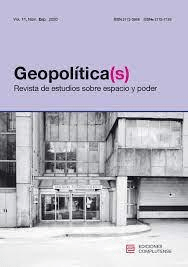
Vol. 11 Núm. Especial (2020): Geopolítica de la pandemia de COVID-19/ Geopolitics of the COVID-19 pandemic / Geopolitica da pandemia de COVID-19. Spanish, Portuguese or English (abstracts in all three languages). Early reflections on international and domestic dimensions of the pandemic covering the USA, Europe, Central America, South America, Japan, Israel Palestine. https://revistas.ucm.es/index.php/GEOP/issue/view/3602
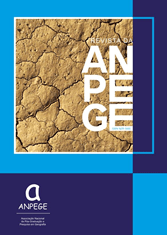
Revista da ANPEGE – 2020, Volume 16 Número 30: Political Geography thematic session
This issue of the journal of ANPEGE, the Brazilian National Association of Research and Graduate Schools in Geography carries a thematic session on Political Geography with 15 articles in Portuguese and Spanish (abstracts are also presented English). https://ojs.ufgd.edu.br/index.php/anpege/issue/view/444/showToc
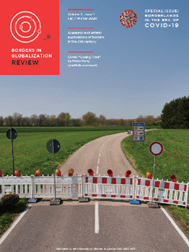
BIG Review 2.1. Special Issue: Borderlands in the Era of COVID-19
Twenty-three essays by more than 30 scholars chronicling border closures in more than 20 borderlands around the world, photography, video, and poetry from borderlands under lockdown. The lead research article is on the theme of ‘bordering the world’, plus a review essay, a film review, and two book reviews. The journal is committed to double-blind peer review, public access, policy relevance, and cultural significance. https://journals.uvic.ca/index.php/bigreview
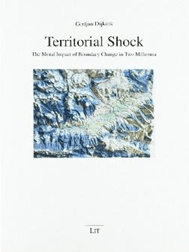
Dijkink, Gertjan (2019). Territorial shock. The moral impact of boundary change in two millennia. Zürich.
We are in the embrace of territorial shock today. Globalization with its migrants, foot-loose firms, cyber-war and surging income inequality induces political instability and longing for a ‘saviour’. This book puts such events in a historical perspective. New social trends collide with territorial principles (closure, identity, governance) that always have been taken for granted. Should we invest the new monarchs with the same authority as the pope (16th century) or accept other classes as co-citizens (19th century)? The answers implied a moral shift and so do our problems with globalization.
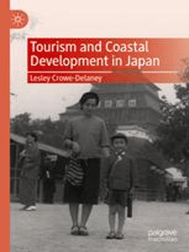
Crowe-Delaney, Lesley (2020). Tourism and Coastal Development in Japan. Palgrave Macmillan.
This book explores contemporary tourism and coastal developments in Hyogo, Japan. In striking detail, Dr. Lesley Crowe-Delaney skillfully contextualizes the tourism industry and policy; discusses hegemonic devices of nationalism, nature, authenticity and tradition, as embedded in tourism strategies, etc. Crowe-Delaney reveals the strains placed on coastal communities when fisheries, tourism, sustainable development, and national policies intersect, offering readers an enlightening discourse of the potency of tourism as a rejuvenation tool.
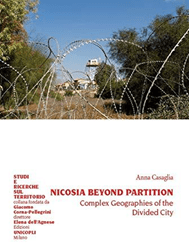
Casaglia, Anna (2020). Nicosia beyond partition. Complex Geographies of the Divided City
(Studi e ricerche sul territorio) Unicopli. This book is the result of a long period of research conducted by the author in Nicosia with the aim of understanding the complex geographies of its spatial and social configuration. Nicosia is the capital of the two entities that emerged after the Greek Cypriot coup and the subsequent Turkish military occupation of part of the island in 1974. The spatial crystallization of this conflict and the reorganization of the city are the main objects of the study. The book tackles the roles of diverse political and institutional actors, placing them in dialogue with the experiences of people living in a divided city.
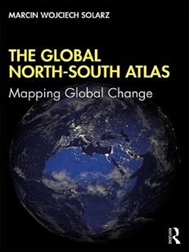
Solarz, Marcin Wojciech (2020). The global North-South Atlas: Mapping Global Change. Routledge. This innovative atlas deconstructs the contemporary image of the North–South divide between developed and underdeveloped countries which was established by the 1980 Brandt Line, and advocates the need for the international community to redraw the global map to be fit for the 21st century. Throughout the book a range of colorful maps and charts graphically demonstrate the ways in which the world has changed over the last 2,000 years. The book concludes by proposing new schemes of categorization between developed and developing countries which might better fit our contemporary global society.
Agnew, John (Ed). (2020). The Confines of Territory. Routledge.
The word ‘territory’ has taken on renewed significance in a world where its close association with state sovereignty has made a serious comeback, invoked alike by proponents of Brexit in the UK, ‘Making America Great Again’ in the USA, and myriad populists from India to Brazil by way of Italy and Hungary. In its first seven years, the journal Territory, Politics, Governance has published numerous articles examining the ways in which territory figures into contemporary political debates and its limits as a concept. The articles in this book are selected from this journal to survey many of the dilemmas and questions that haunt the concept of territory even as its current efflorescence in political discourse ignores them.
Agnew, John & Michael Shin (2019). Mapping Populism: Taking Politics to the People. Rowman & Littlefield.
Brexit, Trump, Le Pen, The Five Star Movement. The recent success of populist movements and politicians is extraordinary, though the rise of populism is understandable in light of increasing political polarization, disappointing politicians, and exhausting election campaigns. With the future trajectory of democracy uncertain, two important questions remain unanswered. How did we get here? And why did we get here? Geography tells us who the people are who have supported populism and the limits and possibilities of its claim to represent all of “the people,” wherever they are.
Rodrigues, Juliana Nunes and Licio Caetano do Rego Monteiro. (2020). Crise e reinvenção dos espaços da política. Editora Consequência.
Crise e reinvenção dos espaços da política foi o título do III Congresso Brasileiro de Geografia Política, Geopolítica e Gestão do Território (CONGEO), realizado em setembro de 2018. Os capítulos deste livro foram escritos pelos/as palestrantes do evento. Os textos nos convidam a uma reflexão geográfica para interpretar o tempo de turbulências que atravessamos. Neste momento de transição e incerteza política no Brasil e no mundo, a geografia política traz abordagens que contribuem para um diálogo que pretende ir além das fronteiras disciplinares e dos muros da universidade.
Moisio, Sami, Christopher Lizotte, Natalie Koch, Andrew E. G. Jonas (2020). Handbook on the Changing Geographies of the State, New Spaces of Geopolitics. Edward Elgar.
This authoritative handbook presents a comprehensive analysis of the spatial transformation of the state, a pivotal process of globalization. It explores the state as an ongoing project that is always changing, illuminating the new spaces of geopolitics that arise from these political, social, cultural, and environmental negotiations
Bliesemann de Guevara, B., and M. Bøås (Eds.) (2020). Doing fieldwork in areas of international intervention. A guide to research in violent and closed contexts. Bristol University Press.
Using detailed insights from those with first-hand experience of conducting research in areas of international intervention and conflict, this handbook provides essential practical guidance for researchers and students embarking on fieldwork in violent, repressive and closed contexts. Contributors detail their own experiences from areas including the Congo, Sudan, Yemen, Bosnia and Herzegovina and Myanmar. They look at how to negotiate complex grey areas and raise important questions that intervention researchers need to consider before, during and after their time on the ground.
Okunev, Igor (2021). Political Geography. Bern, Switzerland: Peter Lang.
This textbook on political geography is devoted to a discipline concerned with the spatial dimensions of politics. This course is an introduction to the study of political science, international relations and area studies, providing a systemic approach to the spatial dimension of political processes at all levels. Political geography develops fundamental theoretical approaches that give insight into the peculiarities of foreign and domestic policies. The ability to use spatial analysis techniques allows determining patterns and regularities of political phenomena both at the global and the regional and local levels
Amilhat Szary, Anne-Laure (2020). Géopolitique des frontières: Découper la terre, imposer une vision du monde. Cavalier bleu.
À travers une approche géo-historique qui décentre le regard européen et permet une relecture tant économique que politique des frontières, ce livre propose une plongée originale dans les implicites de leur construction. Désormais disloquées, fonctionnant en prenant appui sur des lieux hétéroclites, les frontières contemporaines évoluent d’une manière qui transforme en profondeur notre rapport à l’identité. Au fil des pages, on comprend comment ré-ouvrir les possibles politiques à partir de ces lignes qui semblent pourtant enfermer nos imaginaires
Amilhat Szary, Anne-Laure & Grégory Hamez (Dir.) (2020). Frontières – Capes-Agrégation Histoire-Géographie. Armand Colin.
Le texte de cadrage officiel posant la question des frontières aux concours du Capes et de l’agrégation souligne leur centralité comme objet géographique. Ce livre vise à mettre à disposition des étudiant.e.s l’apport multidisciplinaire des border studies dont cet ouvrage présente la première synthèse disponible en français grâce à la contribution de plus de quarante auteur.ice.s, donnant à partager les manières de penser d’une francophonie comprise au sens le plus large du terme (Belgique, Canada, Cameroun, Luxembourg ou Suisse, mais aussi Brésil ou Italie).
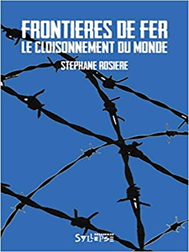
Rosière, Stéphane (2020). Frontières de fer: Le cloisonnement du monde Editions Syllepse.
Du mur que le président Donald Trump entend ériger à la frontière avec le Mexique au mur de séparation édifié par Israël dans le cadre de son projet colonial en passant par Frontex et les multiples murs de l’Europe forteresse, tout indique que nous assistons à ce que l’auteur appelle le «nouveau cloisonnement du monde». Les frontières contemporaines tendent ainsi à devenir de nouveaux «rideaux de fer»: des «frontières de fer». Comment, à la vision «ouverte» et positive des frontières, qui culmina avec la chute du mur de Berlin, le 9 novembre 1989, a succédé une ère de soupçon, de peur et de violences symbolisée par la multiplication de ces « murs » ? Au bout du compte, c’est la question du rôle et de l’impact de ces installations qui sera au coeur de cet ouvrage
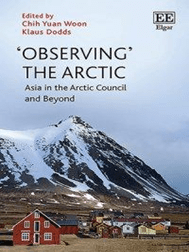
Woon, Chih Yuan and Klaus Dodds (Eds.) (2020). ‘Observing’ the Artic: Asia in the Artic Council and Beyond. Edward Elgar.
Addressing the growing economic, political, and cultural presence of Asian states in the Arctic region, this timely book looks at how that presence is being evaluated and engaged with by Arctic states and their northern communities. A diverse range of authors addresses the question that underpins so much of this interest in Asian engagement with the northern latitudes: what do Asian countries want to gain from the Arctic? This will be a beneficial read particularly for students of Asian and Arctic studies and scholars in geopolitics, international relations and political science.
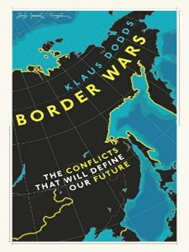
Dodds, Klaus (2021). Border Wars: The conflicts of tomorrow. Penguin.
How are borders built in the modern world? What does Brexit mean for Ireland’s border? And what would happen if Elon Musk declared himself president of the Moon?. In Border Wars, Dodds takes us on a journey into the geopolitical conflict of tomorrow in an eye-opening tour of the world’s best-known, most dangerous and most unexpected border conflicts from the Gaza Strip to the space race. Along the way, we’ll discover just what borders truly mean in the modern world: how are they built; what do they mean for citizens and governments; how do they help understand our political past and, most importantly, our diplomatic future?
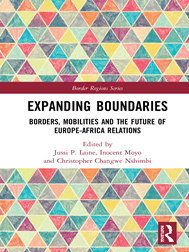
Laine, J. P., I. Moyo, and C. C. Nshimbi (Eds.) (2020).Expanding Boundaries: Borders, Mobilities and the Future of Europe-Africa Relations. Routledge.
This book examines Africa-Europe relationships and intra-Africa relationships vis-à-vis migration. It analyses the African integration project that is being used to effectively manage migration within Africa and across its RECs and harnessing it for development. It presents debates related to the EU’s hardening and securitization of its external border against migrants from Africa. This book volume brings into conversation issues relating to the governance of migration for development, social cohesion and regional integration.
Nshimbi, C. C., I. Moyo, and J. P. Laine (Eds.) (2019). Borders, Sociocultural Encounters and Contestations: Southern African Experiences in Global View. Routledge.
This book looks at the ways African borders impact war and conflict, as well as the ways continental integration could contribute towards cooperation, peace and well-being in Africa. This book engages with cross-border forms of cooperation and opportunity in Africa. It considers initiatives and innovations which can be put in place or are already being employed on the ground, within the current regional and continental integration projects
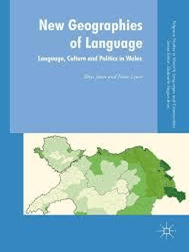
Jones, Roy, and H. Lewis. (2019). New Geographies of Language: Language, Culture and Politics in Wales. Palgrave Macmillan.
This book develops a novel approach to the study of language, bringing it into dialogue with the latest geographical concepts and concerns and provides a comprehensive account of the geography of Welsh language analyzing policy development, language use, ability and shift. This book will set a research agenda for the geographical study of language, developing a conceptual framework that will offer fresh insights to researchers in the fields of Applied Linguistics, Sociolinguistics, Minority Languages, Geolinguistics, and Public Policy.
Lim, Kean Fan (2019). On shifting foundations: State rescaling, policy experimentation and economic restructuring in post-1949 China. Wiley.
This book introduces readers to the current social and economic state of China since its restructuring in 1949. It provides insights into the targeted institutional change that is occurring across the entire country, presents context-rich accounts of how and why these changes connect to regulatory logics established during the Mao-era. A new analytical framework that explicitly considers the relationship between state rescaling, policy experimentation, and path dependency. Prompts readers to think about how experimental initiatives reflect and contribute to the ‘national strategy’ of Chinese development. An excellent extension of theoretical work examining the entwinement of subnational regulatory reconfiguration, place-specific policy experimentation, and the reproduction of national economic advantage
Gombay, Nicole, Marcela Palomino-Schalscha (Eds) 2019). Indigenous Places and Colonial Spaces: The Politics of Intertwined Relations, Routledge
In the aftermath of colonial occupation, Indigenous peoples have long fought to assert their sovereignty. This requires that settler colonial societies comprehend the inadequacy of their responses to Indigenous peoples’ contestations of existing power relations. Taking an international and contemporary perspective, this book critically explores the extent to which Indigenous peoples are transforming the conditions of their coexistence with settler colonial societies. With contributions from Indigenous and non-Indigenous researchers across the humanities and social sciences, the book is divided into four sections that reflect some key arenas of debate: ontological negotiations; assertions of connections to and rights over land; the contradictions embedded in practices of “recognition”; and the possibilities for change based on rightful relationships.
Associated Journals
Antipode http://www.wiley.com/bw/journal.asp?ref=0066-4812
Arab World Geographer https://meridian.allenpress.com/awg
Environment & Planning A, C (Government & Policy), D (Society & Space) https://journals.sagepub.com/home/epn
Eurasian Geography and Economics https://www.tandfonline.com/toc/rege20/current
Geoforum http://www.elsevier.com/locate/geoforum
Geojournal http://www.springerlink.com/content/102895/
Geopolitics http://www.tandf.co.uk/journals/titles/14650045.asp
Political Geography http://www.elsevier.com/locate/polgeo
 IGU Commission on Political Geography